

What is a Bill of Lading ?
A bill of lading (BOL) is a legal document issued by a carrier to a shipper that details the type, quantity, and destination of the goods being carried.This document must accompany the shipped products and should be signed by an authorized representative from the carrier, shipper, and receiver. BOL server three key purpose: Receipt of the cargo: Once a shipment arrives and the carrier gives the shipper the BOL, the shipper acknowledges that the cargo was received without damage and provides the carrier with a receipt that acts as legal evidence of delivery. A document of title to the cargo: When the record of title switches hands, the new owner of the BOL gains responsibility for the freight. The new owner can then choose to hold onto or transfer those goods and BOL. A contract of carriage between the carrier and shipper: A BOL is a legally binding contract that evidences an agreement of shipment between the carrier and shipper. Why is Bill of Lading Important? The importance of a bill of lading lies in the fact that it’s a legally binding document that provides the carrier and shipper with all of the necessary details to accurately process a shipment. This implies that it can be used in litigation if the need should arise and that all parties involved will take great pains to ensure the accuracy of the document. Essentially, a bill of landing works as undisputed proof of shipment. It must be properly managed and reviewed to prevent asset theft. It is therefore important to have a good system of internal control to manage the review and processing of BOLs. Details included in Bill of Lading For any BOL to be considered legitimate and satisfy legal requirements, it must be truthful and include several details, such as: Personal information: This includes the full names, addresses, and contact information of the shipper and the consignee. This information should be easy to find on the form and readable. Purchase order number: These reference numbers are essential to discharge freight for shipment or transfer it after delivery. Description of items: The shipper notes the number of goods, the weight, the dimensions, and any other vital details that are necessary to safely transport the shipment. Freight class: The National Motor Freight Classification (NMFC) classifies freight into one of 18 classes based on density, stowability, portability, and liability. Calculate density by dividing the mass of an object by the volume of the object. The pickup date: This includes the specific date and time that the carrier will pick up the cargo. It can be used as a reference for tracking freight. Type of packaging: Are you shipping pallets, drums, crates, or cartons? Special instructions: If you have any additional requests or specific notes for the carrier, include them. Why BOLs Processing must be well managed The importance of ensuring the accuracy in BOLs in usually underestimated. It is advisable for carriers and shippers alike to ensure BOLs are processed as soon as shipments are delivered to ensure all details pertaining to the load was correctly recognised on the BOL. An efficient and effective BOLs processing system can help carrier secure payment promptly and help keep customers i.e., brokers and shippers satisfied. Helps mitigate potential freight claim. An inaccurate BOL can lead to freight claim against the carrier which can be costly. Not documenting certain items in the BOL, such as being disallowed by shipper from inspecting the loads, can also result in carrier assuming liabilities it could potentially avoid. Missing BOLs can lead to carrier not getting paid, therefore it is important to track and ensure BOLs are scanned and provided by the drivers immediately after the load is delivered. How your assigned Freight Analytics Associate can help you manage this process better: Maintain close communication with drivers and dispatch team to ensure BOLs is retrieved and scanned to the team right after the load is delivered and that the details in BOLs are accurate. Increase the efficiency and effectiveness of the freight billing process by ensuring all invoices are issued correctly with clear supporting documents especially when additional charges such as detention time is included in and that these records are well maintained in the firm database. Develop controls within the freight billing process to ensure risk of errors on BOLs is reduced significantly and that drivers understand their role and responsibility in this process.
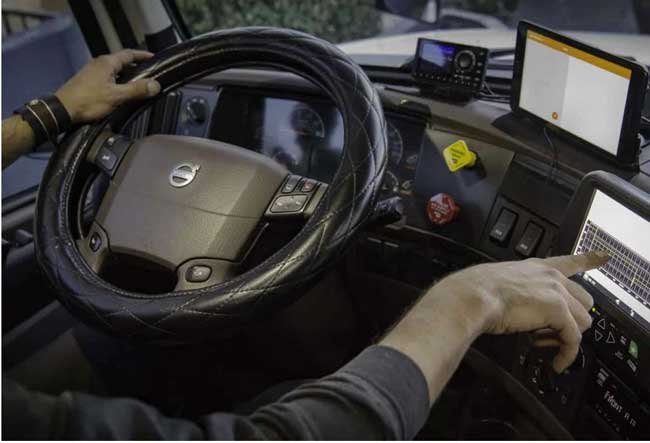
Importance of Establishing an ELD Audit Process
The ELD Mandate specifies that the carrier must audit the ELD logs (not the driver) to make sure the driver logs are as accurate as possible. Personal Conveyance must be done correctly, annotations must be properly used, corrective action and driver training is required, yard moves, and maintenance must be logged properly, and in the event of team drivers, the ELD must display the data for both co-drivers who are logged into the system. Due to manual entry requirements, no log is immune to the risk of falsification. Due to the requirement of manual inputs into the ELD device itself, there is increased risk or error or falsification. There could also be instances where ELDs are switched off intentionally. ELD’s record engine activity, but often fall short on recording human activity, such as duty status, roadside inspections, fuel stops, etc., all of which must be supplemented to engine data to complete the ELD log. Simply put, HOS driver log auditing remains an important procedure even after the ELD mandate. Review and Monitor ELD Violations The most common violations are usually related to the 30-minute rest break, followed by the 11-hour driving limit and 14 hours driving limit. Drivers who continue to accumulate repeated violations should be reprimanded. They should be able to plan their schedule ahead of time, and if they have problems planning their schedule, they should be re-trained again. Review Unassigned Miles Report Review unassigned miles report on a weekly basis and don’t allow it to accumulate. Reassigned the miles to the driver where necessary and ensure that it gets accepted. During an audit FMCSA auditor will ask for the fleet’s unassigned driver report for the month and identify if there was any event of driver log falsification. The auditor will review other related documents and ascertain if the logs were meant to be assigned to a specific driver and if the logs were not assigned, that driver logs would be considered inaccurate or even worse deemed false. Review Odometer Jumps Report It is important to download and review this report to ensure all driven miles are appropriately recorded. There is always a risk that driver may unplug the ELD device on purpose and the only effective way to identify this is to review this report on a weekly basis and make sure all driven miles are appropriately recorded on his or her logs. If the ELD device are unplug on purpose, drivers should be held accountable and strict disciplinary action must be taken to ensure such incidents do not recur. Establish Personal Conveyance (PC) Policy Personal Conveyance is allowed but based only on certain requirements and it should not be misused. More often than drivers do not annotate why PC was used and during inspection, the officer may deem that the driver misclassified driving time as PC. Its therefore important to review the use of PC on a weekly basis and ensure it is applied in accordance with the company’s Personal Conveyance Policy and not misused to do more loads. How your assigned Freight Analytics Associate can help you manage this process better: Download and report the list of violations on weekly basis for management to review. This can include report on use of Personal Conveyance (PC) and whether each use of PC was appropriate Assist Safety Manager in reviewing list of open unassigned miles and assess where these miles should be assigned too, by reviewing the unit’s movement on that given day and ascertaining if it should be re-assigned to a driver. Download other ELD report such as odometer jump report and violation reports for a given week to ensure all driving hours have been appropriately recorded. Perform Hours of Service (HOS) audits, by comparing the ELD record for the selected driver against the loads hauled, and assess if driver had correctly recorded his drive time and break time by making comparison to supporting documents such as fuel and toll receipts.

Dispatch Service 24/7
Many carriers especially the smaller and medium sized carriers usually do not have a specific person to manage dispatch after hours. They tend to depend on the dispatch staffs working during the day shift. As a result of this, issues that arise after hours are usually not managed to the best interest of the carrier’s operations. Decisions made on issues after hours will likely involve procrastination on the issue on hand to the following morning. For example, if a load gets cancelled at 9pm. There is a high probability the day shift dispatch staff, may just have the driver wait till the next day before he or she gets the driver another load. In todays, highly digitalized logistics environment, carriers do always have the opportunity to source for freight at anytime during the day and even late nights. There is always a possibility a shipper or broker may need help on a load that another carrier might have cancelled on them late night or early morning. Therefore, having a dedicated night shift dispatch staff available is critical to ensure issues after hours are managed with the best care possible. Even if a load gets cancelled late hours, the dedicated staff can still and should pursue finding another load to keep the truck moving. Many loads have pick up and delivery schedule between 7pm to 10pm or 5.30am to 7.30am. The probability of a truck not getting loaded on time or a load not getting unloaded on time, is a common problem in this industry. The presence of a dedicated after-hours staff can help reduce the risk of drivers loosing precious hours at plants or warehouses. The constant communication with shippers and brokers on the arrival time for both pick-ups and deliveries, will certainly help reduce the possibility of warehouse or plants not keeping up to their schedule. If the plant or warehouse is indeed behind their schedule, the dedicated after-hours dispatch person can immediately highlight this matter to the shipper and broker and seek detention charges at the same time. Demonstrating an effective and efficient management of after-hours issues will only reflect well on the carrier and will allow shipper and brokers develop more trust on the carrier’s ability to provide good service 24/7. The trucking industry is lot more competitive today and it is extremely important for carrier to offer the highest-level service to the satisfaction of not only the customers but the drivers as well. To achieve this, dispatch should operate 24/7. How your assigned Freight Analytics Associate can help you manage this process better: We have trained personnel in Malaysia available to manage the after-hours dispatch issues to the best interest of both the carrier and driver. A dedicated person will definitely be able to offer and do a lot more in managing after-hours issues as compared to a day shift dispatch staff who will likely be asleep late night. The afterhours dedicated staff may also help on other matter such as assisting in finding a repair facility in the event of a breakdown or providing updated tracking information to shippers or brokers. The assigned staff will be a good point of contact for the drivers after hours and can allow drivers communicate any potential issue or delay immediately rather than wait the next day. Issues can be addressed during that period itself rather procrastinating it to the next day. Most shippers and brokers operate 24/7 and will appreciate a prompt update.

Tracking 24/7
Most brokers and shippers do apply their own tracking system to monitor the progress of a given shipment and offer their customers updates as and when needed. Through proactively monitoring the status of the shipments, brokers or shippers can identify issues in advance and take corrective action to ensure issues on a given load is addressed promptly. The visibility and benefits offered through load tracking far exceeds the cost of establishing this practice. It offers a piece of mind to brokers and shippers and allows for both warehouses and plants to adjust their schedule in advance in anticipation of a delay. To the carrier, load tracking can help informed plants and warehouse to be ready to load or unload the trailer. The close communication between the carrier, brokers, shipper and the personnel at the warehouse and plant will certainly help increase the level of efficiency in coordinating the appointment times for both pick up and delivery. Load tracking is usually through either one of the following methods: Tracking via the carrier ELD (Electronic Logging Device) system Mobile application tracking on drivers’ mobile phone Tracking via phone calls to the driver or carrier’s dispatch personnel An effective established tracking system can help brokers offer good customer service, and a sense of security to their customers. It helps build better relationship and will brokers retain and secure more customers. It also helps brokers maximize capacity of the carriers they work with. By having clear visibility on likely time of arrival and departure of a given unit, brokers can work with carrier and plan their schedule better. Waiting times in between appointments can be significantly reduced which will save both carrier and drivers precious time and money How your assigned Freight Analytics Associate can help you manage this process better for both brokers and shippers: Confirm appointment times with carriers prior to pick up. Ensure driver and carrier are well informed about the requirements of the load. These checks hours before appointment can help mitigate risk of no show at the plant or warehouse. Secure tracking information and constantly update these onto the broker/shipper portal or spreadsheet. Identify loads that are behind schedule and secure updated arrival or delivery time from carrier. Highlight identified issues to management and notify customers of potential delays. Evaluate, if it is feasible to change the appointment time in advance if a delay is anticipated. Maintain close communication with all parties, carriers and customers and help facilitate effective and prompt resolution to issues based on customer’s standard operating procedures and requirements.